
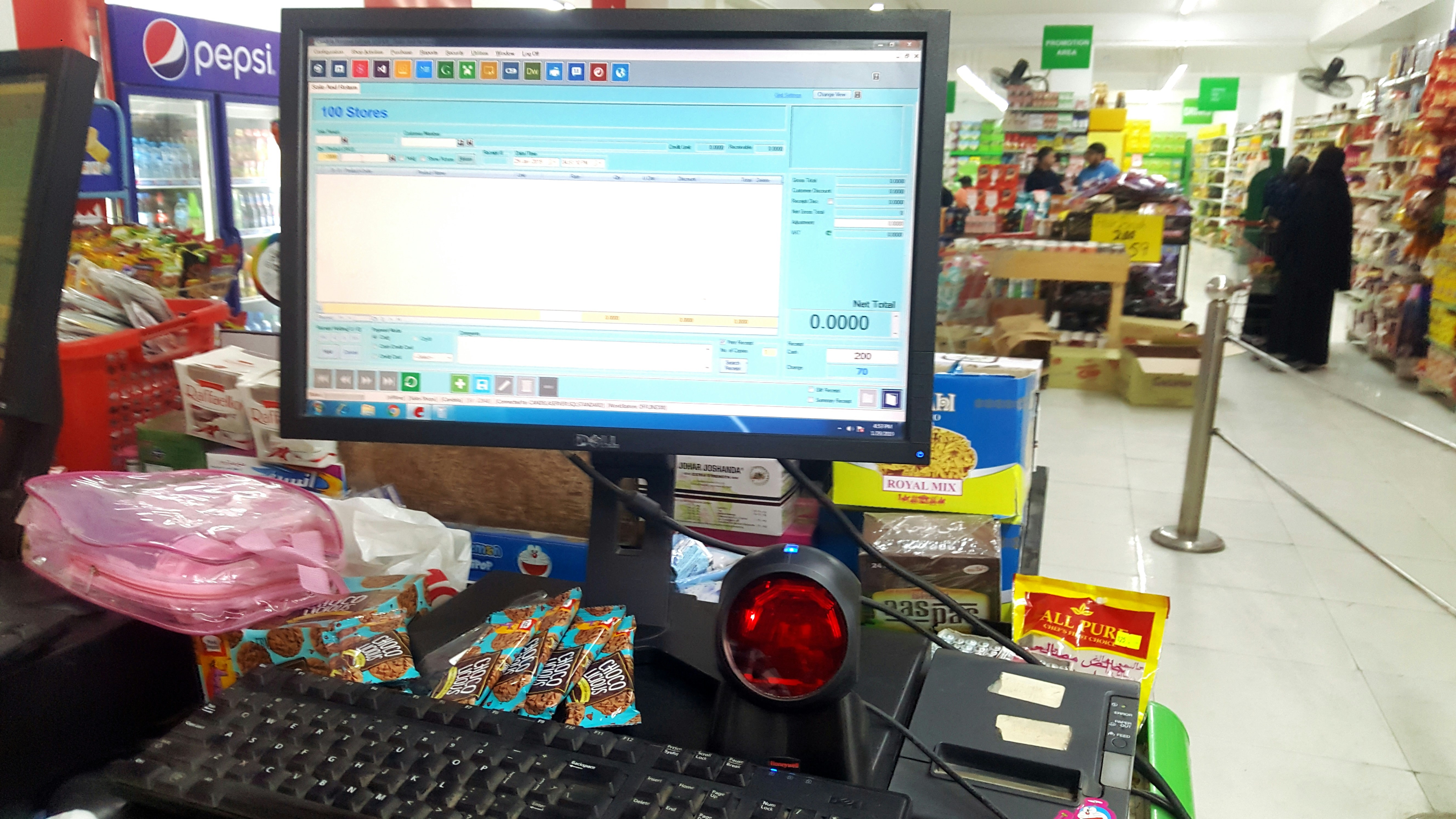
Introduction to Barcode Scanners and POS Systems
Barcode scanners and Point of Sale (POS) systems are essential components of modern retail operations. Barcode scanners are electronic devices that read barcodes, which are graphic representations of data. They convert the captured barcode information into a digital format that can be easily processed. This technology allows for quick and accurate identification of products, streamlining the sales process and significantly reducing human error in data entry.
On the other hand, POS systems are comprehensive solutions that manage the entire transaction process. They integrate hardware and software to facilitate sales, track inventory, manage customer information, and generate reports. A typical POS system may include a barcode scanner, cash register, receipt printer, and software application that oversees sales analytics and inventory management.
The integration of barcode scanners with POS systems enhances the efficiency of retail operations. For instance, when a customer purchases an item, the cashier uses the barcode scanner to quickly retrieve the product’s price and description from the POS system. This not only speeds up transactions but also ensures that the correct pricing is applied, contributing to customer satisfaction.
Furthermore, barcode scanners facilitate efficient inventory management. Retailers can easily track stock levels, determine reorder points, and manage overstocks. The real-time data provided by barcode scanning helps store managers maintain optimal inventory levels, reducing the costs associated with excess inventory while ensuring that popular items are always in stock.
In summary, both barcode scanners and POS systems play crucial roles in enhancing the operational efficiency of retail businesses. They not only streamline sales but also provide valuable insights into inventory management, driving overall business success.
Benefits of Integrating Barcode Scanners with POS Software
The integration of barcode scanners with Point of Sale (POS) software offers numerous advantages for businesses aiming to enhance their operational efficiency. One of the primary benefits is the improved accuracy in sales tracking. By utilizing barcode scanning technology, each transaction is recorded accurately, minimizing human error that often occurs during manual entries. This precision allows for better analytics and reporting, which can drive informed business decisions.
In addition to heightened accuracy, integrating barcode scanners with POS systems can lead to significant reductions in labor costs. With automated scanning, employees spend less time keying in product codes and more time focusing on customer service. This streamlined approach not only optimizes workforce utilization but also lessens the chances of burnout among staff, contributing to overall employee satisfaction.
Enhanced inventory management is another critical advantage realized through this integration. Barcode scanners allow for real-time tracking of inventory levels, which can help prevent stockouts and overstock situations. By maintaining an accurate inventory, businesses can ensure they meet customer demand without tying up unnecessary capital in excess stock.
Furthermore, the speed of checkout processes is noticeably improved with the use of barcode scanners. Customers can experience expedited transactions, leading to shorter wait times and a more pleasant shopping experience. Faster checkouts are linked to increased customer satisfaction, which can translate into repeat business and positive word-of-mouth recommendations.
Finally, the integration of barcode scanners with POS software reduces errors during transactions. As barcodes are scanned, discrepancies related to pricing or product details are minimized, fostering trust and reliability in the purchasing experience. Overall, the benefits of this integration reinforce the necessity for businesses to adopt modern technology solutions.
Types of Barcode Scanners and Their Compatibility with POS Systems
Barcode scanners are essential tools for modern retail operations, enabling efficient tracking of inventory and sales transactions. Different types of scanners are available on the market, each offering unique features that determine their compatibility with various point-of-sale (POS) systems. The three primary types of barcode scanners are handheld scanners, fixed-mount scanners, and mobile scanners.
Handheld scanners are perhaps the most versatile option. They are designed for ease of use and mobility, allowing staff to scan items quickly and efficiently from various angles. Most handheld scanners connect to POS systems through USB ports or Bluetooth connections, facilitating integration with a wide range of software applications. Their compatibility depends on the scanner model and the supported protocols of the chosen POS software, but they typically work seamlessly with popular systems.
Fixed-mount scanners, on the other hand, are installed in a static position, often at checkout counters or on production lines. These scanners are ideal for high-volume retail environments, where items can be scanned as they pass by. Their integration with POS software is typically more straightforward since these scanners are designed for specific environments and usually come with pre-configured settings that align with common retail systems. Ensuring that the fixed-mount scanner supports the barcode types used in the business is crucial for optimal operation.
Mobile scanners, which can be handheld or integrated into smartphones and tablets, offer flexibility for stores that prioritize mobility and quick inventory management. These scanners often connect to POS systems via wireless technology. The compatibility of mobile scanners with POS software will depend significantly on the operating system and application capabilities. Businesses must evaluate the ecosystem of devices and software they use to determine the most efficient integration strategy.
Steps to Integrate Barcode Scanners with POS Software
Integrating barcode scanners with POS software is essential for optimizing efficiency in retail and inventory management. The process entails several critical steps that ensure seamless functionality between devices and software.
1. Planning the Integration: Before diving into the integration process, it is crucial to outline the specific needs of your business. Consider factors such as the volume of transactions, types of products sold, and the current POS software capabilities. By understanding these requirements, you can plan for a solution that enhances operational efficiency.
2. Selecting the Right Equipment: Not all barcode scanners are created equal; therefore, selecting compatible and suitable hardware is vital. Investigate various models of barcode scanners that align with your POS software. Look for compatibility, supported barcode types, and connectivity options such as USB, Bluetooth, or Wi-Fi. This ensures that the scanner can communicate effectively with the POS system.
3. Configuring Software Settings: Once the equipment has been selected, the next step involves configuring your POS software to recognize and work with the barcode scanner. This typically includes accessing the settings menu within the POS software to add new devices. Follow the software’s specific procedures to ensure it properly detects and integrates with the new hardware.
4. Testing the Integration: After completing the configuration, rigorous testing is essential to ensure that the integration works as intended. Scan various barcodes to verify that the data populates accurately within the POS system. Address any communication issues that may arise during testing, as effective communication between the scanner and POS software is crucial for maintaining operational efficiency.
By carefully executing these steps, businesses can successfully integrate barcode scanners with their POS software, resulting in improved transaction processing and inventory management capabilities.
Common Challenges in Integration and How to Overcome Them
Integrating barcode scanners with point of sale (POS) software can significantly enhance operational efficiency, but several challenges may arise during this process. One notable obstacle is software incompatibility, where the barcode scanner may not work seamlessly with existing POS systems. This often stems from differences in software versions or communication protocols. To address this issue, it is crucial to conduct thorough compatibility checks prior to the integration. Businesses should ensure that both the barcode scanner and POS system support similar data formats and can communicate effectively.
Another common challenge comes from hardware issues. This might involve outdated barcode scanners that cannot read the latest barcode types or hardware malfunctions during integration. To mitigate such problems, businesses should regularly assess their hardware capabilities and consider upgrading to newer models that support current technology standards. Additionally, maintaining an inventory of spare parts may prove beneficial to quickly resolve hardware-related issues during the integration phase.
Employee training presents yet another critical area of concern when integrating barcode scanners with POS software. Staff may find it difficult to adapt to new technology, leading to disruptions in workflow. To overcome this challenge, businesses should invest in comprehensive training programs that not only demonstrate how to operate the barcode scanners but also how to troubleshoot common issues. Utilizing hands-on workshops and providing ongoing support can greatly enhance employee confidence and proficiency in using the new systems.
Overall, while integrating barcode scanners with POS software can present challenges, strategic planning and proactive measures can simplify this process. By focusing on software compatibility, updating hardware, and providing ample training, businesses can ensure a smooth integration experience.
Real-Life Examples of Successful Integrations
Integrating barcode scanners with Point of Sale (POS) software has transformed various businesses, leading to enhanced operational efficiency and superior customer service. One notable case is that of a mid-sized grocery store that faced challenges in inventory management and checkout speed. By implementing a comprehensive barcode scanning system integrated with their existing POS software, the store reported a significant decrease in checkout time. Customers appreciated the quicker service, leading to increased customer satisfaction and retention rates.
Another successful example can be found in a retail clothing outlet that struggled with tracking inventory and managing sales data. Through the integration of barcode scanners, the store was able to automate inventory updates in real-time and allow for rapid scanning during the checkout process. This integration not only simplified the inventory management but also minimized human error, resulting in more accurate sales data. As a direct outcome, the clothing outlet observed a 30% reduction in manual inventory checks and an increase in sales revenue within the first quarter post-integration.
A more unique instance is seen in a large e-commerce platform which adopted barcode scanning to streamline their warehousing processes. With thousands of products and high order volumes, the integration of barcode scanners with their POS software allowed for efficient order fulfillment and improved accuracy in shipping. Warehouse staff could quickly locate products, scan them, and send orders with minimal errors. The outcome was a dramatic improvement in delivery times and a boost in customer reviews, highlighting the role of technology in enhancing overall business operations.
Best Practices for Effective Integration
Integrating barcode scanners with point-of-sale (POS) software can significantly enhance the efficiency of retail operations. However, to ensure a successful integration, organizations should observe several best practices. One crucial aspect is conducting adequate planning prior to the integration process. This necessitates a thorough assessment of the existing POS system and determining compatibility with various barcode scanner models. Proper planning helps in minimizing unexpected issues during the deployment phase.
Continuous training for staff is another pivotal component. Employees should be well-acquainted with the functionalities of both the barcode scanners and the POS software to leverage their full potential. Regular training sessions can familiarize staff with new features, troubleshooting techniques, and the importance of scanning accuracy. Empowered staff can improve overall efficiency and reduce transaction times.
Additionally, maintaining regular updates of both the barcode scanners and the POS software is vital. Software updates often enhance security, improve functionalities, and include bug fixes. As technology evolves, staying current with the latest versions assists in maximizing the performance of both systems. Organizations should establish a routine checking system to ensure that both hardware and software are up-to-date.
Another best practice involves conducting ongoing evaluations of the integration process. This includes monitoring operational metrics, user feedback, and system performance post-implementation. By analyzing these factors, businesses can identify areas needing improvement and make necessary adjustments. Regular evaluations foster a proactive approach to resolving any potential complications that may arise over time.
Incorporating these best practices not only enhances the integration of barcode scanners with POS software but also ensures sustained efficiency and adaptability in an ever-evolving market.
Future Trends in Barcode Scanning and POS Technology
As the retail and service industries continue to evolve, barcode scanning technology and Point of Sale (POS) systems are anticipated to undergo significant advancements. One key trend shaping the future of barcode scanning is the increasing prevalence of mobile payment systems. Customers are increasingly opting for convenience and speed, leading to a surge in the adoption of mobile wallets and app-based payment solutions. This trend not only simplifies transactions but also necessitates the seamless integration of barcode scanners with POS software to provide real-time data processing and inventory management.
Advancements in barcode technology also play a vital role in the future landscape of POS systems. Innovations such as QR codes are becoming more common, offering customers a direct link to product information, promotions, or detailed specifications. This shift requires POS software to adapt to various scanning formats and ensure compatibility with new types of barcodes, enhancing customer interaction and engagement. Furthermore, the development of 2D barcodes, which can hold significantly more data than traditional 1D barcodes, promises to streamline transactions and improve overall efficiency in inventory tracking.
Another emerging trend is the integration of artificial intelligence (AI) with POS systems, which can significantly enhance the functionality of barcode scanners. AI technology has the potential to analyze customer behavior and purchasing patterns, offering businesses invaluable insights that drive decision-making. Additionally, machine learning algorithms can optimize inventory management by predicting stock requirements based on historical data and trends. This synergy between AI and barcode scanning technology is set to revolutionize how businesses operate, enabling them to offer personalized customer experiences and improve operational efficiency.
Conclusion
In conclusion, the integration of barcode scanners with POS software is not just a trend but a substantial leap toward achieving operational efficiency and enhancing customer satisfaction across various business sectors. As discussed, barcode scanners streamline the checkout process, minimize human error, and significantly accelerate inventory management. By accurately collecting data, these systems allow for improved reporting and analytics, which enables businesses to make informed decisions based on real-time information.
The advantages of integrating barcode scanning technology with POS software extend beyond mere speed; they contribute to a more organized inventory control system and reduce the likelihood of discrepancies. Consequently, businesses that adopt this integration will likely experience increased productivity, allowing staff to focus on customer service rather than manual data entry or inventory checks.
It is imperative for businesses looking to optimize their operations to evaluate the benefits of this technological combination. By embracing barcode scanners and effectively integrating them with modern POS systems, organizations can enhance their overall performance and deliver a better experience to their customers.
Ultimately, the fusion of barcode scanning technology with POS software can serve as a vital catalyst for growth, efficiency, and improved customer engagement, positioning businesses to thrive in a competitive marketplace. Therefore, investing in this integration is not merely an option but a strategic necessity for any retail or service-oriented establishment focused on future success.
© barcodly.com- All rights reserved